Tankless units are clever machines, and that is both their strength and their weak spot. Instead of keeping forty or fifty gallons hot around the clock, a tankless heater springs into action only when water starts moving: a flow sensor detects demand, the control board fires the burner or elements, and water is heated on its way through the heat exchanger. Every step is watched by a sensor, and if any reading drifts outside its expected range, the board shuts the heater off and displays a code. For Paterson, NJ homeowners, that usually traces back to a short list of causes: scale building up inside the heat exchanger, a sticking or dirty flow sensor, an ignition problem at the igniter or flame rod, or a venting or gas supply issue the unit reads as unsafe.
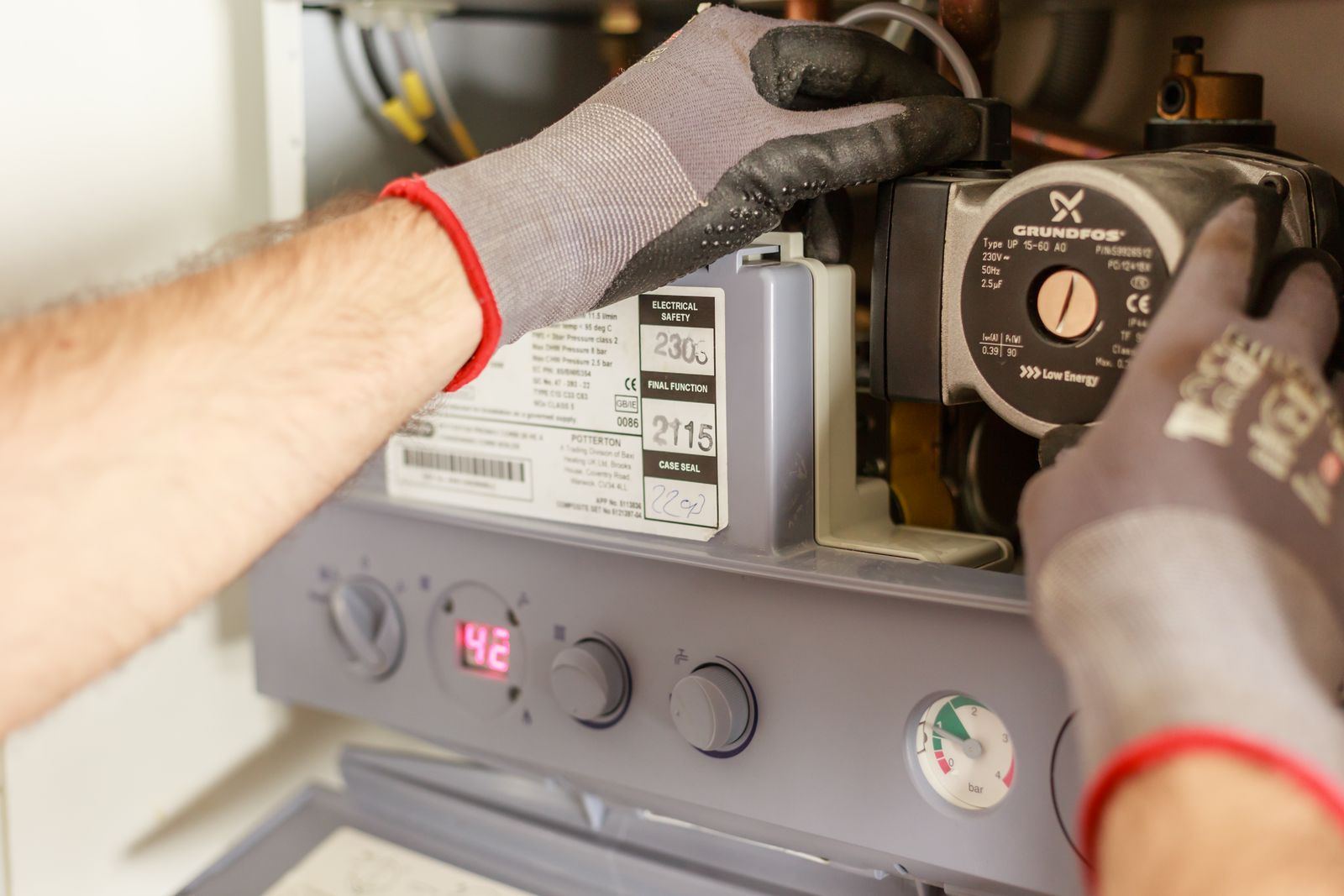
Our approach to tankless repair is simple: measure first, replace second. When we arrive at your Paterson home, we record the active code and the unit's fault history, then work through the systems behind it. Flow sensors are checked with water running to confirm they report demand correctly. Flame rods and igniters are tested electrically. Gas pressure is read at the inlet with the burner at maximum, because a line that holds steady at idle can sag badly under full load. The vent and air intake are inspected end to end, and the heat exchanger is judged by the temperature rise it achieves at a known flow. By the time we recommend a repair, we know it is the right one.
The good news is that most tankless problems are very fixable. A descaling flush clears most mineral buildup, sensors and igniters are replaceable parts, and venting faults usually come down to a blocked intake or a loose joint. We carry common parts for the major brands and service both gas and electric units, so a typical tankless repair is done in one trip. We are also honest about the harder cases: a unit fed by a gas line too small for its full BTU rating will keep throwing codes until the line is upsized, and a heat exchanger damaged by scale may not be worth repairing on an older heater. And if your complaint is the cold-water sandwich, that brief burst of cold between two hot draws, we will tell you whether it is normal for your model or something we can reduce. Need tankless repair in Paterson? Call (973) 221-6774 today.
Our most requested service is Water Heater Repair in Paterson. That's the place to start for most homes.
How to Tell Something Is Wrong
Recognizing the warning signs early can save you money and keep a slow drip from turning into a flooded utility room. If any of the following sound familiar, it's worth having the unit checked:
- Water that swings between hot and lukewarm in the middle of a shower
- A combustion fan that sounds louder or rougher than normal
- Temperature dropping sharply when a second shower or the dishwasher starts
- Longer bursts of cold water between hot draws than you used to get
- Water dripping from the cabinet or the condensate line
- Small draws, like a bathroom sink, that never trigger the heater
- A clicking igniter with no flame, or a flame that lights and quickly drops out
- The display showing an error code instead of a temperature
Act Before It Gets Worse
A little rust-colored water or a relief valve that drips now and then can be the first hint of a tank that is close to the end. A quick call to (973) 221-6774 gets a technician out to check it before it becomes an emergency.
Talk to Us About Tankless Water Heater Repair
We'll diagnose the problem and give you a straight answer on the fix.
Call (973) 221-6774 TodayYour Tankless Water Heater Repair Questions Answered
Why Hire a Professional for Tankless Water Heater Repair?
Tankless repair is a poor fit for DIY for two reasons: the diagnosis is tricky and the hazards are real. On the diagnostic side, an ignition code might mean a worn igniter, a dirty flame rod, low gas pressure, or a blocked intake, and replacing parts until the code clears adds up fast. On the safety side, a gas unit burns fuel at a very high rate and vents exhaust that contains carbon monoxide, while an electric unit can pull more than 100 amps through multiple 240-volt breakers. A mistake with either one is not a small mistake.
A trained technician with the right instruments gets to the answer faster. Ours read the fault history, measure flame signal and igniter resistance, test flow sensor output, and check gas pressure under full load with a manometer, which is the only reliable way to catch a gas line that holds pressure at idle but sags when the burner ramps up. We descale with a circulating pump and the right solution, then flush thoroughly so nothing corrosive is left in your plumbing. Just as important, you get an honest opinion: if the heat exchanger is damaged on an older unit, we will say so before you spend money on a repair.
How We Handle Tankless Water Heater Repair
We follow the same careful process on every water heater, whether it's a quick thermostat swap or a full tankless conversion. Here's the short version:
Read the Unit First
Every visit starts at the control board. We read the current code and past faults, then confirm the diagnosis with a meter and a manometer on the flow sensor, ignition parts, gas supply, and vent.
Honest Answers & Upfront Price
No surprises. We walk you through the cause and the fix and give you the price up front. If the real problem is an undersized gas line or a worn-out heat exchanger, you will know before anything is spent.
Repair & Descaling
Most tankless repairs are finished in one trip: a descaling flush, a new flow sensor, igniter, or flame rod, a cleaned inlet screen, or a corrected vent connection.
Full Performance Test
We run hot water at several flow rates, confirm the unit fires cleanly and holds its setpoint, and check gas pressure at full fire before we leave.
Simple Ways to Extend Your Water Heater's Life
A little routine care goes a long way toward keeping a water heater running well past its expected lifespan. Here are our recommendations:
- Keep the unit powered during freezing weather so its freeze protection can work
- Clear debris, snow, and dryer lint away from the vent and intake openings
- Flush scale out of the heat exchanger annually, and sooner in hard water
- Treat a code that returns after a reset as a symptom worth diagnosing, not ignoring
- Rinse the small filter screen on the cold inlet every few months
- Get the supply line checked before adding gas appliances, which can starve a tankless unit
- Protect the heat exchanger with a softener or scale inhibitor when your water is hard
Doing It Yourself vs. Hiring a Technician
A few tasks, like checking the temperature setting or lifting the relief valve lever to test it, are fine for homeowners, but most water heater work involves gas lines, venting, 240-volt circuits, or a tank full of scalding water, and that belongs with a professional. Consider the following comparison:
| Consideration | DIY Attempt | Hiring a Pro |
|---|---|---|
| Reading the Code | Trial and error based on the manual | Fault history and live readings pinpoint it |
| Descaling | Partial flush that leaves scale behind | Proper solution, pump, and flush time |
| Combustion Safety | Gas pressure and vent joints unchecked | Manometer test at full fire, vent inspected |
| Electrical Work | Exposed wiring and sensitive electronics | Power verified off, board handled correctly |
| Replacement Parts | Parts bought before the fault is known | Correct part for the exact model |
| Result | Symptom patched, cause remains | Lasting repair, confirmed by testing |
Get Tankless Water Heater Repair Help Today
Cold showers and damp floors don't get better on their own. Paterson Water Heater can have a technician headed your way soon.
Call (973) 221-6774 TodayTankless Water Heater Repair Across the Paterson Area
Our technicians handle tankless water heater repair throughout Paterson and the surrounding communities, with the same upfront pricing everywhere we work.